
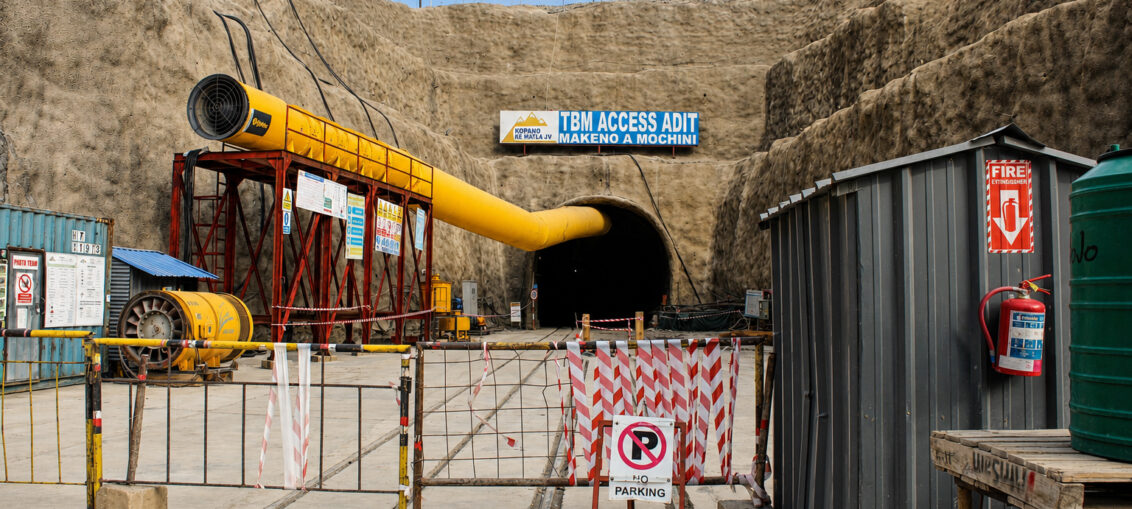
A 1,485-metre Polihali TBM access tunnel, excavated beneath Tloha-Re-Bue village to facilitate construction of the transfer tunnel from Polihali Dam to Katse Dam. Photos: Sechaba Mokhethi
- Tloha-Re-Bue villagers say a borehole, wells and springs that supplied the village for decades have dried up since tunnel blasting began under their village.
- One villager says her borehole stopped flowing in July 2024, but Kopano Ke Matla’s assessment relied on September 2024 blasting records when assessing the possible impact of its blasts.
- Kopano Ke Matla’s September 2024 records show four blasts between 9pm and 6am, including blasts at 2:26am and 2:30am.
- LHDA denies that Polihali Project activities have deprived villages of water and says alternative water infrastructure is being constructed to replace sources that will be inundated.
Selloane Nyakane
The Lesotho Highlands Water Project (LHWP) phase two is expected to increase water transfer to South Africa from 780 million to more than 1.27 billion cubic metres while earning Lesotho royalties and delivering infrastructure, employment and other economic benefits.
But in Tloha-Re-Bue village, which sits over a 1,484-metre access tunnel leading to the 5-metre-diameter, 38.5-kilometre main tunnel connecting Polihali Dam to Katse Dam, residents say the project has already taken away the one resource they once had in abundance: water.
An investigation by the MNN Centre for Investigative Journalism (MNN) found that the Tloha-Re-Bue village in Malingoaneng, which once relied on village wells, an over four decades-old borehole and nearby springs, now spends hours every day travelling to fetch water from a single remaining source, Phohlola well, which itself is expected to disappear under the future Polihali reservoir.
We also found a discrepancy in how the impact of tunnel blasting on Nkhelleng Pule’s borehole was assessed. Pule says the borehole stopped flowing in July 2024, after blasting operations had begun in 2023. But the assessment by the blasting contractor relied on blasting records of September 2024 to decide there was no evidence that tunnel excavation affected the borehole.
While villagers believe tunnel excavation blasting may have affected underground water sources, the Lesotho Highlands Development Authority (LHDA) rejects those claims, with its spokesperson Mpho Brown saying investigations have found no evidence linking construction activities to declining water supplies.
Water sources began disappearing
Tloha-Re-Bue residents say the village’s water problems escalated in July 2024, when a borehole and two springs that had supplied families for decades suddenly dried up.
Among them is Nkhelleng Pule, whose family depended on a borehole drilled in 1980 by a businessman, Randford Joseph, who later relocated leaving Pule in charge of the borehole. It supplied Pule’s household, the principal chief, other villagers and a nearby guesthouse. Pule says it consistently produced enough water to fill storage tanks, sometimes overflowing because of its high yield.
“For more than 40 years, we never had a problem,” Pule said. But in July 2024, during blasting of the Polihali transfer tunnel by Kopano Ke Matla Joint Venture, she said the water suddenly stopped flowing.
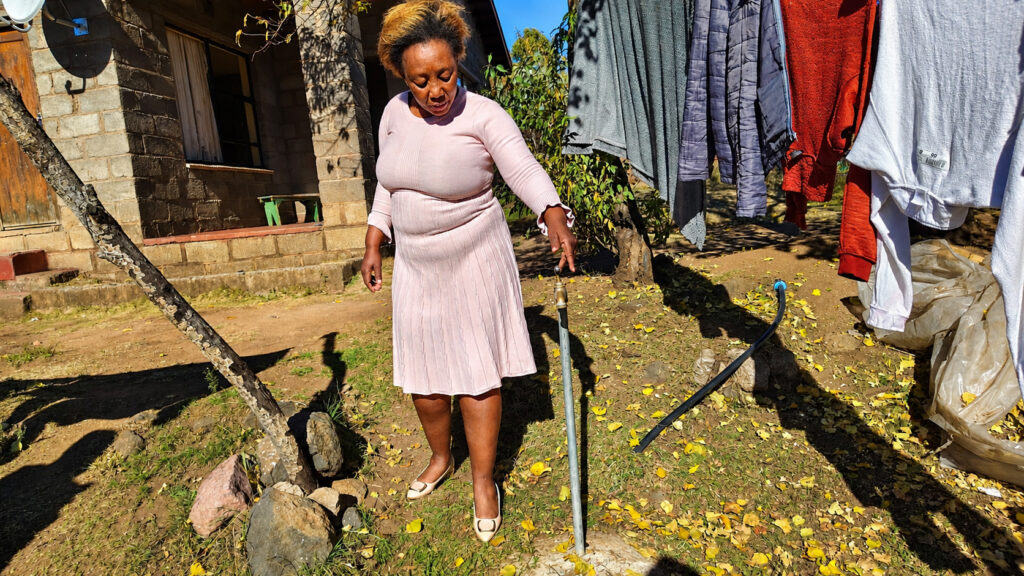
Nkhelleng Pule turns on the tap at her home in Tloha-Re-Bue, but no water comes out.
Kopana Ke Matla Joint Venture, made up of Yellow River Company, Sinohydro Bureau 3 and South African-registered, Chinese-owned Unik Civil Engineering, is constructing the tunnel. This contract is valued at M9.2 billion.
Pule says the water decline coincided with intensive tunnel blasting that continued day and night beneath the upper side of their village. Around the same period, she says, nearby wells also began drying up.
She lodged a complaint on November 25, 2024, but says she received no response. In September 2025, she requested an investigation into the impact of blasting on the borehole. The investigation was conducted in April 2026, but she did not receive the report until August 17, after MNN had asked LHDA about the matter on June 2.
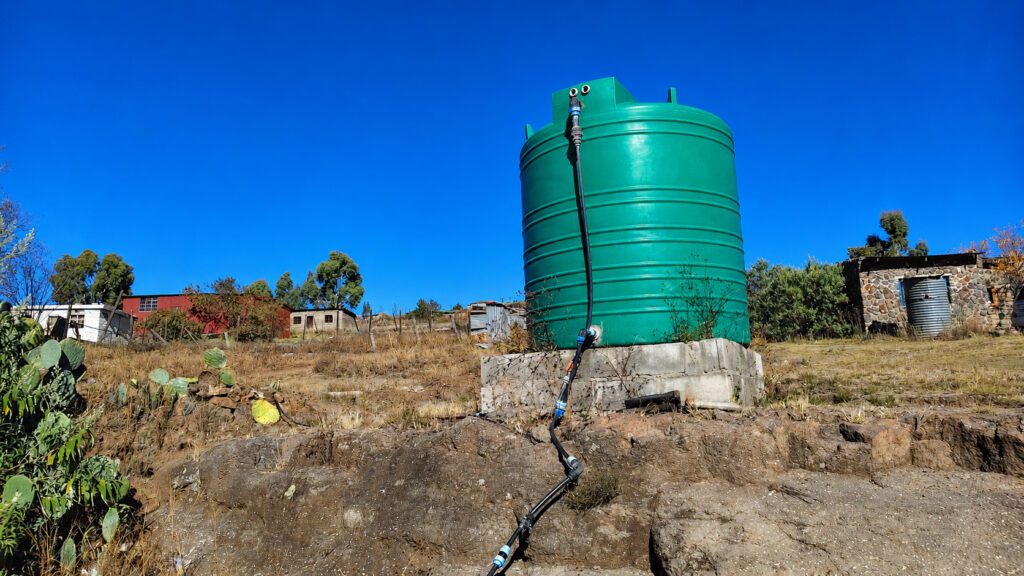
Pule’s empty storage tank after water stopped flowing from the borehole in July 2024.
In its report, Kopano Ke Matla said there was no evidence to support the possibility that tunnel excavation had caused the reduction in the borehole’s yield. It said the absence of groundwater flowing into the tunnel during excavation suggested that the excavation had not intersected significant water-bearing structures.
However, Sello Moseli, who is a community human rights defender, recalls workers saying construction had occasionally been stopped by groundwater entering the tunnel, even though he didn’t have dates for such incidents.
But the company said mechanical parts of a borehole could deteriorate over time, reducing or stopping the pump’s operation. “This deterioration can be caused by corrosion due to the chemical composition of the groundwater or abrasion due to mechanical composition of the groundwater, especially in poorly developed wells. Debris, mineral deposits, or biological growth can block pump intakes and discharge pipes, reducing water flow or completely blocking water. It concluded that its “drill and blast activities … cannot be held liable for current borehole status.”
Initially, Pule says a community liaison officer from the company, Nthabiseng Rasetota, informed her that their specialists said the borehole was too far from their blasting activities to have affected the borehole. Still, the report shows that the tunnel face is just 411 metres away. MNN could not establish the depth of this tunnel.
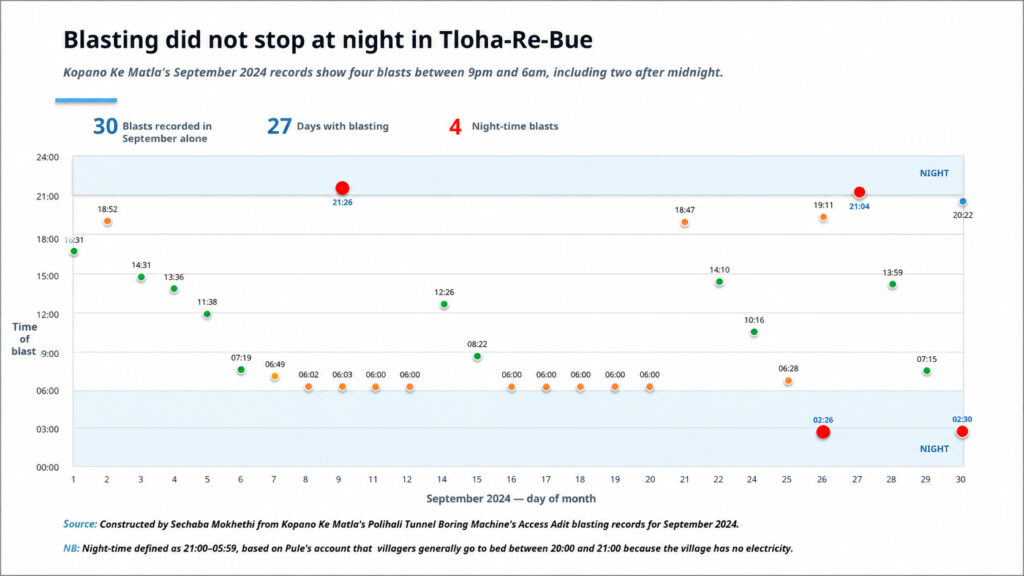
As seen above, the report’s blasting analysis was based on September 2024 records. But in a complaint to Kopano Ke Matla dated November 11, 2024, Pule said the borehole had stopped flowing in July 2024. She told MNN that blasting had begun in 2023. Asked why September records were used instead, Malakeng Hloma, who was acting as the LHDA’s spokesperson, said they would only be able to answer next week. Our story will be updated once we receive this response.
Another villager, Tlelinyane Ramakalima, said another spring at Matutleng, which had always produced water even during dry periods, also dried up after tunnel excavation began. “The wells had never dried before blasting activities,” he said.
One spring now serves four villages
As other water sources declined, residents increasingly depended on Phohlola, a natural spring that now supplies contraction workers, Tloha-Re-Bue and neighbouring communities that include Ha Mothokoa,Moeling and Matutleng.
But residents say after tunnel blasting works began, even Phohlola no longer produces water at the rate it once did. Moseli recalls a time when people arrived at the well, filled their buckets immediately and returned home without waiting. Today, he says, long queues are common at Phohlola.
Moseli describes Phohlola as a reliable spring that produces relatively warm water in winter and cool water in summer. That unique spring, however, is also due to disappear under the Polihali reservoir. He argues if graves could be relocated because of the project, the same effort should be made to protect a water source that has sustained generations.
Hours spent fetching water
The disappearance of nearby water sources has fundamentally changed daily life.
MNN met Tlelinyane Ramakalima with three other boys and three donkeys loaded with six 30 litres of jerry cans from Phohlola. The group was from Matutleng, another village under Tloha-re-bue. “We had to come to Phohlola because springs near our homes have dried up in 2025 after tunnel blasting works started”.
Ramakalima, who lives near the resettlement construction contractor Sixty-15 Joint Venture’s camp, said he would spend as much as three hours for a return trip to Phohlola using a wheelbarrow if he did not own donkeys.
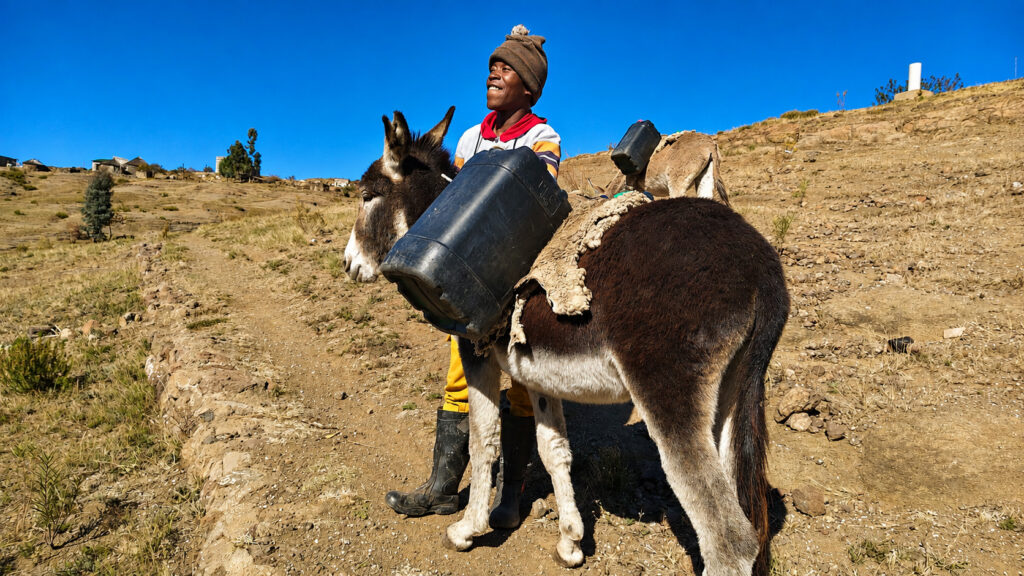
Tlelinyane Ramakalima transports water from Phohlola, a remaining water source for Tloha-Re-Bue and neighbouring villages.
MNN observed women carrying washing basins and buckets on their heads while others pushed wheelbarrows loaded with containers. Others transported laundry to Phohlola because water was no longer available closer to home.
Village chief Masiphola Sekonyela confirmed that elderly residents and people without the physical strength to fetch water often pay others with wheelbarrows to collect it on their behalf.
Among those most affected is 91-year-old Masefabatho Sekonyela, who has lived her entire life in Malingoaneng. She recalls having a standpipe only a few steps from her house before road construction disrupted the village water system. “I only had to walk a short distance to fetch water for drinking, cooking and irrigating my vegetables,” she said. Today, she must depend on water fetched from Phohlola.
“Sometimes I spend the whole day without food because I don’t have water to cook,” she said.
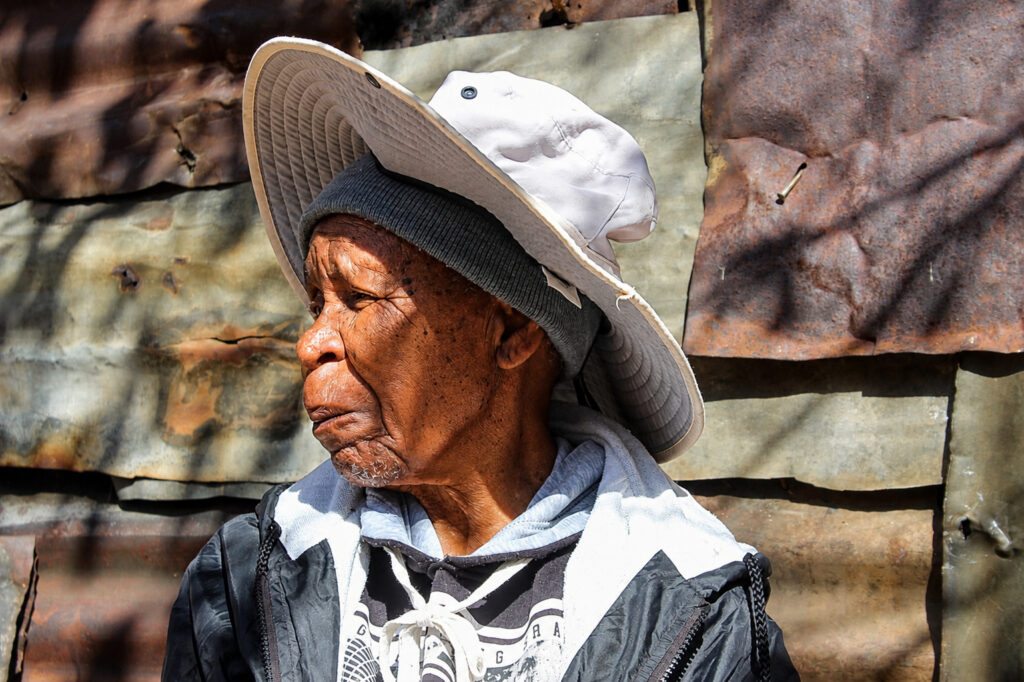
Masefabatho Sekonyela, 91, says she now depends on water fetched from Phohlola after the nearby water supply was disrupted.
LHDA disputes villagers’ claims
In a written response to MNN, Brown said LHDA first became aware of concerns through reports submitted to project structures and subsequently carried out investigations together with the contractor and local leadership.
“Investigators identified leakage from an overflow pipe in the existing water system; the defect reduced the efficiency of the system but did not amount to a complete loss of water supply to the community,” Brown said, adding that corrective measures were implemented.
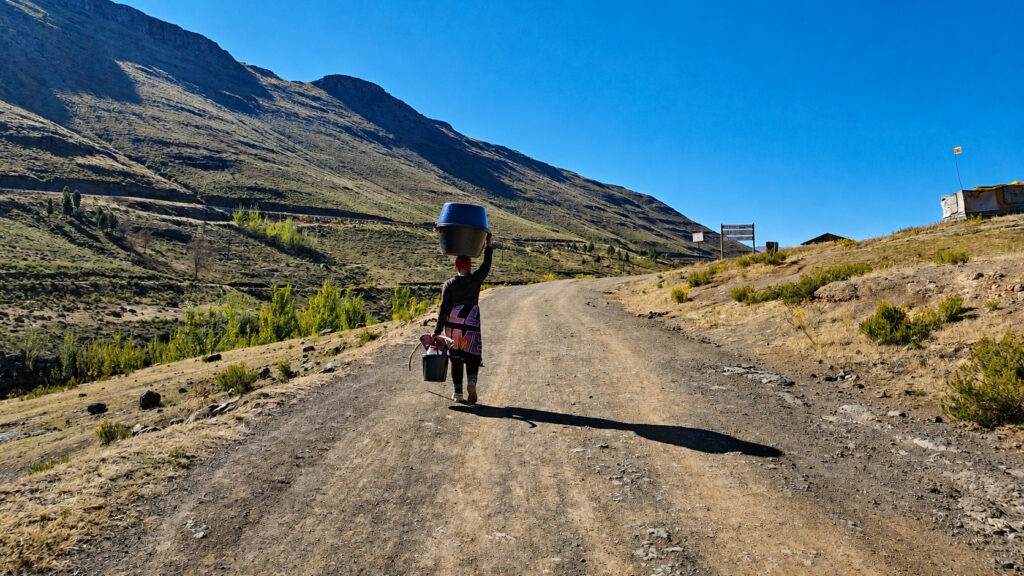
‘Mateliso Nqatso carries a washing basin filled with laundry from Phohlola, where residents now fetch water for their homes.
Brown further said planning for replacement water infrastructure formed part of the Polihali resettlement programme long before the reservoir inundates existing water sources.
The authority said alternative infrastructure has already been provided in some villages and that Sixty15 JV is currently constructing water systems for communities including Ha Ramonakalali, Masakong, Malingoaneng and Tloha-Re-Bue.
It rejected claims that project activities had deprived communities of water. “Based on LHDA’s current records and monitoring information, there are no villages that have been deprived of water access as a direct result of Polihali Project activities,” the authority said.
The authority said environmental and hydrogeological assessments form part of the project’s ongoing monitoring programme and that if evidence eventually shows project activities reduced water from any established source, its compensation policy requires LHDA to restore or replace that source with one of equivalent quality, yield and convenience.
MNN sought a scientific explanation from the Ministry of Water Affairs, which is responsible for water regulation, on whether tunnel blasting excavation could affect groundwater sources such as springs and boreholes at Tloha-Re-Bue.
Questions were sent to Director of Water Affairs Motoho Maseatile, Public Relations Officer Makananelo Motseko and Principal hydrogeologist Tsepang Morienyane on 12 June 2026. Despite repeated follow-up telephone calls, the ministry had not responded by the time of publication.
