
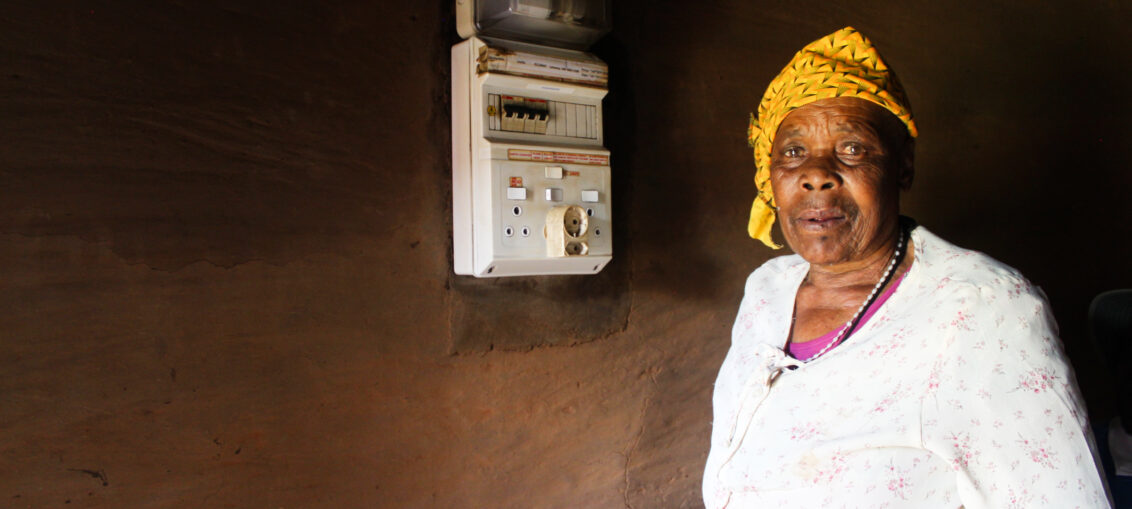
‘Malipolelo Leotla shows the OnePower ready board installed in one of her two homes. The board lacks a meter box. Photos: Sechaba Mokhethi
Residents in some of remote villages in Mokhotlong say they are being charged M5 per kilowatt for off-grid electricity, more than double the M2.08 paid by on-grid users, yet they cannot see, track, or verify the power they are paying for.
Across communities served by OnePower Lesotho’s off-grid solar mini-grids, villagers report that they have no way of monitoring how much electricity they buy or how quickly it is consumed. With no household meter boxes and unreliable balance notifications, many say electricity simply cuts off without warning, leaving them guessing how their money is spent.
By 2022, OnePower’s solar mini-grid project had expanded to at least 10 villages, supplying off-grid electricity to an estimated 30,000 people in areas not connected to Lesotho’s national grid. The company says it has since rolled out 11 mini-grids nationwide.
But in households we visited, there are no visible meters showing electricity usage or remaining credit. Residents say they only realise their balance has run out when the lights suddenly go off.
Questions sent to the regulator, Lesotho Electricity and Water Authority (LEWA), in January have yielded no answers. LEWA spokesperson Sebusi Khanyela repeatedly postponed a response, saying he was awaiting approval from his superiors, before eventually conceding that he could not secure one, leaving the plight of these villagers unaddressed.
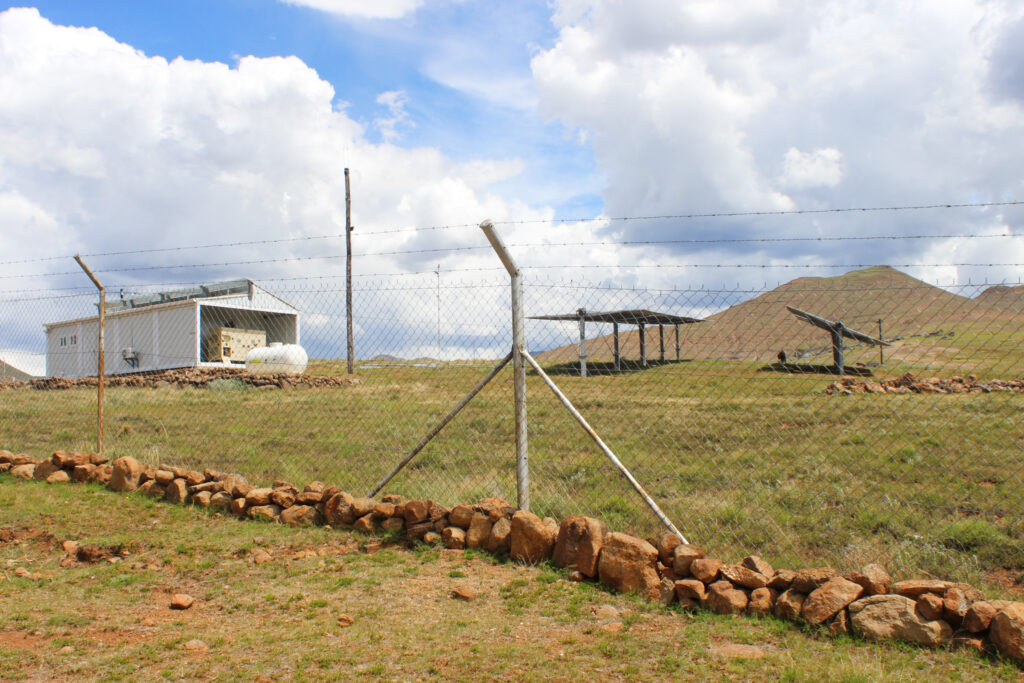
OnePower solar panels and a backup generator infrastructure at Maphiring village in Mokhotlong district.
“It just shuts off”
In an interview, Matšeliso Molefe of Malakabeng in Matsoaing said residents cannot independently monitor their electricity consumption. “When the units have run out, it just shuts off abruptly,” she said.
Ha Setefane village committee chairperson Moeketsi Ramothangoana echoed the concern. “We can’t see how much we credit into our accounts, and we also can’t trace the balance. We only know when the lights shut off. It’s a blind system.”
Ramothangoana said the company relies on SMS notifications to inform customers of balances, but these messages have become irregular. “It has been many months since I last received that kind of SMS. I just top up blindly to avoid abrupt shut-offs.”
OnePower Lesotho is part of a wider operation that also works in Zambia and Benin. The company’s CEO and founder, Matthew Orosz, is a US citizen and former Peace Corps volunteer in Lesotho.
When we sent questions to Orosz, they were responded to by Tumelo Makhetha, OnePower’s director of operations. “These 11 mini-grids are located in Tlhanyaku, Matsoaing, Mashai, Sehonghong, Lebakeng, Sehlabathebe, Ketane, Tosing, Sebapala, Ribaneng and Ha Makebe and are at various stages of development,” Makhetha said. “Seven are delivering power to customers, and four are planned to start delivering power in early 2026. The total number of customers currently connected is around 1,180.”
“Beyond that, all is blind”
Makhetha said meters are installed on electricity poles rather than inside households. Customers, he said, can check balances by sending a “please call” message to a designated OnePower number from a registered phone.
“They receive a low-balance notification once their credit falls below M10,” Makhetha said. Customers can also contact customer care via WhatsApp or SMS to request their balance.
But villagers say access to this system is unreliable.
“Sometimes those numbers are not accessible,” Molefe said. “You buy electricity today, tomorrow it’s gone. When you call, they switch it back on. This happened to me for almost a week. I even threatened to take the issue to the radio before it was fixed.”
Ramothangoana said callback requests often go unanswered. “Beyond calling to ask for a balance, all is blind. When we send the call-back messages they encourage us to send, there is usually no response.”
Makhetha acknowledged that the system is not without faults. “We do encounter technical challenges from time to time, as happens in any technology-based operation,” he said, adding that OnePower has a “very responsive call centre” and an operations and maintenance team.
“All customers must register using their cellphone number and purchase electricity via mobile money platforms such as M-Pesa or EcoCash,” he said. “After completing a purchase, the customer immediately receives an SMS confirming the transaction and amount purchased.”
Villagers, however, say when problems are reported, they are often told the issue is due to mobile network failures, something the company says is beyond its control.
Last month, Ramothangoana said it had been two months since they last received SMSes of their balances. He said they asked OnePower to allow them to buy their own meterboxes, but “they said their ready-boards cannot work with meterboxes.”
Paying close to triple the national tariff
Cost remains another major concern.
Electricity supplied through Lesotho’s national grid costs M2.08 per kilowatt-hour, according to the Lesotho Electricity Company’s media release on its implementation of 2025/2026 tariff adjustments. OnePower charges M5 per kilowatt-hour, an increase of more than 140%.
“Some of us initially used electricity for cooking, but we had to stop,” Ramothangoana said. “Now we use it only for lighting and charging phones. Sometimes people don’t even light outside or go for long periods without recharging.”
Malipolelo Leotla of Matsoaing, who earns a living selling traditional beer, said she struggles to afford electricity for her two houses. “I often use candles because I can’t always afford electricity,” she said.
Makhetha said OnePower cannot match the national grid tariff because it is “below cost-reflective” and subsidised. “The disparity is well understood,” he said, adding that addressing it would require a government subsidy mechanism for mini-grid operators, “such as ourselves”.
In November last year, Minister of Natural Resources Mohlomi Moleko told Parliament that mini-grid electricity costs are high. “We are working on an energy bill that we want to pass in Parliament, which will reduce costs through subsidies,” he said.
Makhetha said OnePower is self-funded through local and international investment and debt. “For this reason, our tariff reflects the real-life costs of delivering electricity to our customers.”
Connection fees and cut-offs
Villagers also have to pay the upfront connection costs. Households paid about M1,000 for a ready board and pole installation, a fee that Ramothangoana said many could not afford.
Ramothangoana said the company later introduced a six-month payment plan, but even that was out of reach for some families. A week after our visit in December, he said OnePower disconnected five households in his village for non-payment.
Makhetha said the programme clearly outlines eligibility and default conditions. “This program does spell out the conditions under which a customer qualifies and under which the customer is expected to meet their obligation to maintain payments…”
Despite the challenges, some residents say the project has improved their lives.
Molefe said access to electricity allowed her to expand her sewing business. “I used to rely on a hand-driven sewing machine. Now I can sew more and earn more,” she said.
She supports a household of five and says the additional income has enabled her to send her child to a private school and cover transport and food costs. “Life has improved,” she said, even as concerns over cost, transparency, and access remain unresolved.
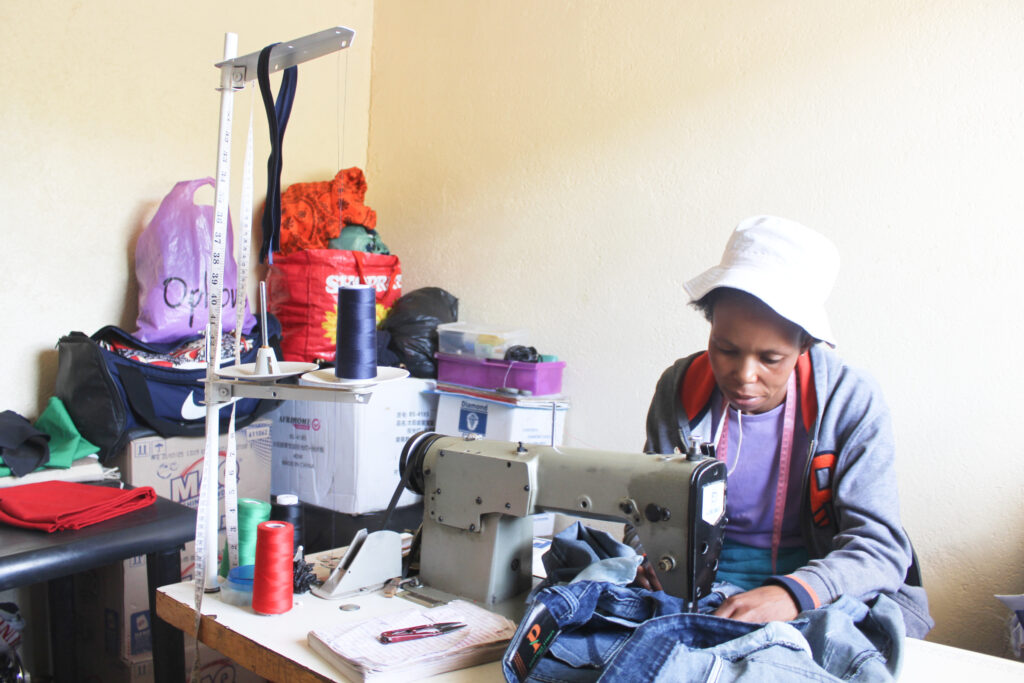
Despite the persistent challenges surrounding electricity access and monitoring, Matšeliso Molefe, who resides in Matsoaing, acknowledges that OnePower electricity has brought significant improvements to her daily life.
